Every parent knows the feeling. Your child seems a little off quieter than usual, not eating well, maybe a slight fever and you find yourself asking, “Is this something to watch at home, or should I see a doctor?” That small uncertainty sits with you all day.
The reassuring truth is that most childhood illnesses are common and manageable. What helps is having someone who truly understands children close by a pediatric care centre in Malad where a trained doctor can look at your child, explain what’s happening, and tell you exactly what to do next.
This guide breaks down what pediatric care actually involves, how a children’s doctor differs from a general physician, and how to know when it’s time to see a specialist. No jargon, no scare tactics just clear answers for the questions parents genuinely have.
First, What Makes Pediatric Care Different?
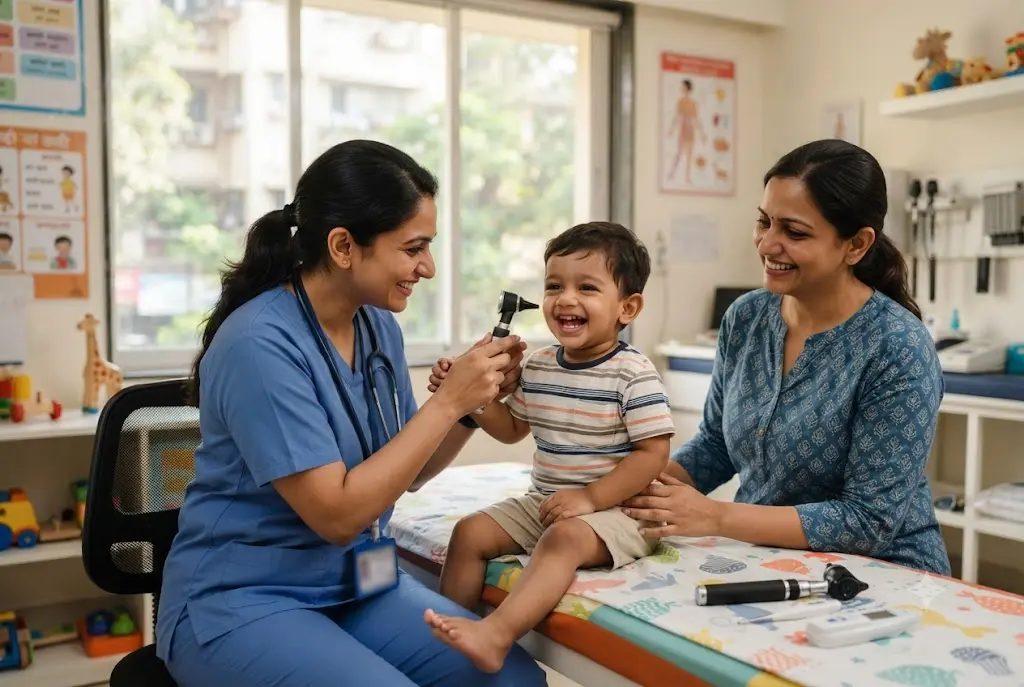
Pediatrics is the branch of medicine focused entirely on children from newborns right up to the late teens. A pediatrician in Malad East isn’t simply a doctor who happens to treat kids. They’re trained specifically in how children’s bodies grow, how illnesses behave differently in a five-month-old versus a five-year-old, and how to treat safely at every stage.
That difference matters more than most parents realise. A child’s symptoms, medicine doses, and even the way they describe pain are all unique. A toddler can’t always tell you where it hurts. A newborn can go from mildly unwell to seriously unwell quickly. Specialist training is what allows a child health specialist in Mumbai to spot the subtle signs that a general check-up might miss.
At Imperial Hospital & Trauma Centre in Malad East, Mumbai, care is built around a patient-first philosophy accurate diagnosis, appropriate treatment, and a compassionate approach that puts both child and parent at ease.
What a Pediatric Care Centre Actually Handles
A good pediatric care centre in Malad supports your child’s health in two broad ways: keeping them well, and treating them when they’re unwell.
Day to day, that usually includes:
- Routine well-child check-ups to monitor growth and catch issues early
- Vaccinations given on the recommended schedule
- Diagnosis and pediatric treatment in Malad for everyday illnesses like fever, cough, cold, ear infections, and stomach upsets
- Growth and development monitoring, tracking height, weight, and milestones
- Guidance for parents on feeding, sleep, behaviour, and nutrition
- Referrals to other specialists when a child needs focused care
The aim isn’t only to fix problems. It’s to help your child grow up healthy, and to give you a calm, knowledgeable point of contact whenever you’re unsure.
Children’s Health Needs Change With Age
One thing that surprises many first-time parents is how much a child’s health needs shift as they grow. What you watch for in a baby is very different from what matters for a school-going child.
Here’s a simple picture of how care tends to change:
- Newborns and infants: feeding, weight gain, jaundice, sleep, and the first rounds of vaccination
- Toddlers: frequent coughs and colds, tummy troubles, minor injuries, and early speech and movement milestones
- School-age children: immunity building through repeated infections, allergies, asthma, vision or learning concerns, and overall growth
- Pre-teens and teens: puberty-related changes, nutrition, posture, mental well-being, and healthy habits
A pediatric care centre supports all of these stages, adjusting its focus as your child grows. That continuity one team that knows your child’s history over the years is genuinely valuable.
Why Growth and Development Care Matters So Much
You may have wondered why doctors keep measuring a child’s height, weight, and head size at every visit. It isn’t just record-keeping. Child growth and development care is one of the most powerful early-warning tools in medicine.
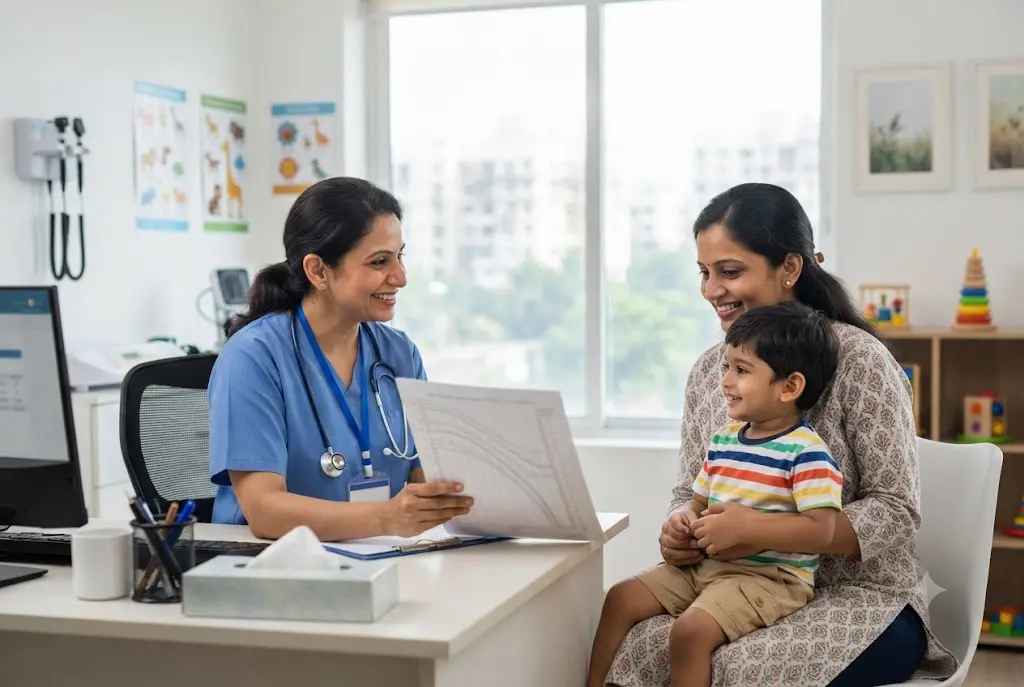
By tracking these measurements against standard growth charts the kind used worldwide, including those from the World Health Organization a pediatrician can spot patterns that signal a possible issue long before it becomes obvious. Steady, expected growth is reassuring. A sudden change in the pattern can be an early clue worth investigating.
Development is tracked too the age-appropriate milestones like smiling, sitting, walking, and talking. If a child is falling behind in an area, catching it early often means simpler, more effective support. This is exactly why regular check-ups matter even when your child seems perfectly healthy.
Pediatric OPD and Emergency Care: Knowing the Difference
Not every worry is an emergency, and knowing the difference saves a lot of stress. A pediatric care centre generally offers two kinds of support.
Pediatric OPD (outpatient department) is for planned, non-urgent visits routine check-ups, vaccinations, mild illnesses, follow-ups, and everyday parenting questions. Most of your visits will be here.
Emergency care is for situations that can’t wait. You should seek urgent help if your child shows any of the following:
- Difficulty breathing, fast breathing, or the chest pulling in
- A fever in a baby under three months old
- Persistent vomiting or diarrhoea, or signs of dehydration
- A seizure, unusual drowsiness, or a child who is very hard to wake
- A serious injury or fall, or a rash that doesn’t fade under pressure
Having access to both paediatric OPD and emergency care under one roof means you’re covered whether it’s a routine sniffle or a night that suddenly turns worrying. Imperial Hospital & Trauma Centre offers emergency services available around the clock.
When Should You See a Specialist Instead of Your Family Doctor?
For many small concerns, a family doctor is a perfectly good first stop. But there are times when a child specifically benefits from a pediatrician’s focused expertise. Consider a child health specialist in Mumbai when:
- Your child is a newborn or young infant, where specialist judgement matters most
- An illness keeps coming back or isn’t improving as expected
- You have growth or development concerns
- Your child needs ongoing management of something like asthma or allergies
- You simply want a doctor who deals with children all day, every day
There’s no harm in choosing specialist care when it comes to your child. Trusting your instinct as a parent is often the right call.
How a Typical Visit Works
If you’ve never taken your child to a dedicated pediatric care centre, here’s roughly what to expect, so it feels less daunting:
- Check-in and history the team notes your child’s age, symptoms, and any past health details.
- Examination the pediatrician examines your child gently, often measuring growth as well.
- Discussion you’ll talk through what’s happening and what it likely means.
- Plan this may involve simple advice, medication, a test, or a follow-up visit.
- Guidance for home clear instructions on care, warning signs to watch, and when to return.
A good pediatrician explains everything in plain language and welcomes your questions. You should never leave a visit feeling confused about your child’s care.
What Affects the Cost of Pediatric Care?
Cost is a fair thing to think about, and it varies from case to case. Rather than a single fixed figure, the final cost of pediatric treatment in Malad usually depends on factors such as:
- The type of consultation (routine visit versus specialist review)
- Any tests or investigations your child needs
- Medicines prescribed
- Whether treatment is outpatient or requires a hospital stay
- The specific condition and its complexity
For exact charges or to understand what’s covered under insurance, it’s best to contact the hospital directly. Many facilities, including Imperial Hospital & Trauma Centre, work with a range of insurance providers.
Why Consider Imperial Hospital & Trauma Centre?
Located in Malad East, Mumbai, Imperial Hospital & Trauma Centre focuses on compassionate, patient-centred care delivered by experienced medical professionals. For families across Malad, having a facility nearby that combines everyday consultations with 24/7 emergency support is genuinely reassuring.
What tends to matter most to parents is simple: careful examination, clear explanations, and being treated with warmth rather than rushed through a queue. That human, patient-first approach sits at the heart of the care offered here. For details on specific pediatric services, the official website or a direct call to the hospital is your most reliable source.
Conclusion
Raising a healthy child isn’t about anticipating every illness. It’s about knowing you have a trusted place to turn when something feels off and knowing that most of the time, things are more manageable than they first appear.
A dependable pediatric care centre in Malad gives you both: expert treatment on the difficult days, and steady guidance through the ordinary ones. When your child is watched over by people who understand children deeply, a lot of that everyday worry quietly eases.
If your child is due for a check-up or vaccination, or you’ve simply had a question on your mind, reaching out early is always worthwhile. A short conversation with a pediatrician can save you days of uncertainty.
To learn more about the pediatric services offered, you can reach out to Imperial Hospital & Trauma Centre in Malad East, Mumbai:
- Phone: +91 7208805148
- Email: helpdesk.ihtcmalad@gmail.com
- Address: Ground Floor, Office No. 2, 7, 8, Sethia Imperial Plaza, Opp. Times of India, Western Express Highway, Malad (East), Mumbai – 400097
- Timings: 9 AM – 5 PM, Monday to Saturday (emergency services available 24/7)
- Website: imperialhospitalandtraumacentre.com
Frequently Asked Questions
1. What is a pediatric care centre in Malad? It’s a facility where children receive medical care from doctors trained specifically in children’s health — covering routine check-ups, vaccinations, treatment of illnesses, growth monitoring, and emergency support when needed.
2. What does a pediatrician do? A pediatrician diagnoses and treats children from birth through the teenage years, monitors growth and development, provides vaccinations, and guides parents on nutrition, behaviour, and overall well-being.
3. When should I take my child to a pediatrician instead of a general doctor? Consider a specialist for newborns, illnesses that keep returning or aren’t improving, growth or development concerns, or ongoing conditions like asthma. When it comes to a child, specialist care is always a reasonable choice.
4. How often should my child have a check-up? Younger children need frequent visits for growth monitoring and vaccinations. As children grow, routine check-ups continue at less frequent intervals. Your pediatrician will advise a schedule suited to your child.
5. What is the difference between pediatric OPD and emergency care? The OPD handles planned, non-urgent visits like check-ups and mild illnesses, while emergency care is for urgent situations such as breathing difficulty, high fever in infants, seizures, or serious injuries.
6. Why is growth and development monitoring important? Tracking height, weight, and milestones helps detect potential health or developmental issues early, when support is usually simpler and more effective. It’s a key reason regular check-ups matter.
7. What are warning signs that my child needs urgent medical care? Difficulty breathing, fever in a baby under three months, persistent vomiting, seizures, unusual drowsiness, or a serious injury all call for prompt medical attention.
8. Does Imperial Hospital & Trauma Centre offer emergency care for children? Imperial Hospital & Trauma Centre in Malad East provides emergency services available 24/7. For specifics on pediatric emergencies, it’s best to check the official website or contact the hospital.
9. How much does pediatric treatment in Malad cost? Cost depends on the type of consultation, any tests, medicines, and whether hospitalisation is needed. For exact charges and insurance details, contact the hospital directly.
10. Where is Imperial Hospital & Trauma Centre located? It is located in Malad East, Mumbai convenient for families in Malad and surrounding areas looking for reliable children’s healthcare.